| Home sales dropped 11.3%, after having been up year-over-year for the previous four months. The median price for single-family, re-sale homes in Santa Cruz County was down 21.9% year-over-year, while the average price declined 8.4%. | Coastal Commission Changes The California Coastal Commission is undergoing a makeover, with the changes potentially giving the Arana Gulch plan a boost and holding future implications for two major issues in Santa Cruz: the proposed desalination plant and the beachfront La Bahia Hotel. In the past few weeks, Gov. Jerry Brown and state lawmakers have appointed several new commissioners, including a former Ventura mayor and the first member from Del Norte County. While they haven't yet met as a group, the new members' collective track records are solidly pro-environmental. But it is who they replaced that has backers of Arana Gulch quietly optimistic. Two members who voted against the project are gone, replaced by television producer Dayna Bochco and Marin County Supervisor Steve Kinsey. MORE | What You Should Know about Appraisals Understanding how appraisals work will help you achieve a quick and profitable refinance or sale. MORE
| Real Estate News After stumbling in February, sales of existing homes rose 3.7 percent in March from the month before, according to a National Association of Realtors report released April 20th. Completed sales of existing single-family homes, townhomes, condominiums and co-ops fell 6.3 percent compared to March 2010—when a federal homebuyer tax credit program elevated sales—to a seasonally adjusted annual rate of 5.1 million units. "With rising jobs and excellent affordability conditions, we project moderate improvements into 2012, but not every month will show a gain—primarily because some buyers are finding it too difficult to obtain a mortgage," said Lawrence Yun, NAR's chief economist, in a statement. He said the generally upward trend in monthly existing-home sales suggests the housing market is "clearly on a recovery path." The median price for existing homes nationwide fell 5.9 percent year-over-year in March, to $159,600. Distressed properties, typically sold at a discount, made up 40 percent of sales last month, compared with 35 percent in March 2010. | | The Economy New home sales rose 7.3% in April to a seasonally adjusted annual rate of 323,000 units from an upwardly revised rate of 301,000 units in March. Economists had expected a pace of 300,000 units in April. The Mortgage Bankers Association said its seasonally adjusted composite index of mortgage applications for the week ending May 20 rose 1.1%. Refinancing applications increased 0.9%. Purchase volume rose 1.1%. Orders for durable goods—items expected to last three or more years—fell 3.6% in April after a revised 4.4% increase in March. Excluding volatile transportation-related goods, orders posted a monthly decrease of 1.5%. The Commerce Department announced that gross domestic product—the total output of goods and services produced in the U.S.—increased at an annual rate of 1.8% in the first quarter of 2011. This follows a 3.1% pace of growth in the fourth quarter of 2010. Retail sales fell 1% for the week ending May 21, according to the ICSC-Goldman Sachs index. On a year-over-year basis, retailers saw sales increase 3.1%. Pending home sales, a forward-looking indicator based on signed contracts, fell 11.6% in April after a 5.1% increase in March. On a year-over-year basis, pending sales are down 26.5%. | | Lending News: Mortgage rates ease for first time in a month New home sales rose 7.3% in April to a seasonally adjusted annual rate of 323,000 units from an upwardly revised rate of 301,000 units in March. Economists had expected a pace of 300,000 units in April. The Mortgage Bankers Association said its seasonally adjusted composite index of mortgage applications for the week ending May 20 rose 1.1%. Refinancing applications increased 0.9%. Purchase volume rose 1.1%. Orders for durable goods—items expected to last three or more years—fell 3.6% in April after a revised 4.4% increase in March. Excluding volatile transportation-related goods, orders posted a monthly decrease of 1.5%. The Commerce Department announced that gross domestic product—the total output of goods and services produced in the U.S.—increased at an annual rate of 1.8% in the first quarter of 2011. This follows a 3.1% pace of growth in the fourth quarter of 2010. Retail sales fell 1% for the week ending May 21, according to the ICSC-Goldman Sachs index. On a year-over-year basis, retailers saw sales increase 3.1%. Pending home sales, a forward-looking indicator based on signed contracts, fell 11.6% in April after a 5.1% increase in March. On a year-over-year basis, pending sales are down 26.5%. | | Local Market Stats Market Barometer: 
Prices (Single-family, Santa Cruz city): 
Commercial rents:  

| | | | | The information in this e-mail is provided solely for informational and/or entertainment purposes. If your property is listed with another real estate company or if you have a buyer's agency agreement with an agent, please disregard this offer. It is not my intention to solicit the offerings of other real estate brokers. I disclaim any warranties or representations concerning the information contained in this email. I do not guarantee the accuracy of the information contained in this e-mail and instruct you to independently verify the accuracy of the information provided. All intellectual property rights are retained by their owners. |
| | Contact me: email: walter@831.com | phone: 831.246.4663
Walter Stauss / Lifestyles Real Estate
500 Seabright Avenue
Santa Cruz, California 95062
US
Read the VerticalResponse marketing policy. |  | 
Understanding how appraisals work will help you achieve a quick and profitable refinance or sale. 1. An appraisal isn’t an exact scienceWhen appraisers evaluate a home’s value, they’re giving their best opinion based on how the home’s features stack up against those of similar homes recently sold nearby. One appraiser may factor in a recent sale, but another may consider that sale too long ago, or the home too different, or too far away to be a fair comparison. The result can be differences in the values two separate appraisers set for your home. 2. Appraisals have different purposesIf the appraisal is being used by a lender giving a loan on the home, the appraised value will be the lower of market value (what it would sell for on the open market today) and the price you paid for the house if you recently bought it.
An appraisal being used to figure out how much to insure your home for or to determine your property taxes may rely on other factors and arrive at different values. For example, though an appraisal for a home loan evaluates today’s market value, an appraisal for insurance purposes calculates what it would cost to rebuild your home at today’s building material and labor rates, which can result in two different numbers.
Appraisals are also different from CMAs, or competitive market analyses. In a CMA, a real estate agent relies on market expertise to estimate how much your home will sell for in a specific time period. The price your home will sell for in 30 days may be different than the price your home will sell for in 120 days. Because real estate agents don’t follow the rules appraisers do, there can be variations between CMAs and appraisals on the same home. 3. An appraisal is a snapshotHome prices shift, and appraised values will shift with those market changes. Your home may be appraised at $150,000 today, but in two months when you refinance or list it for sale, the appraised value could be lower or higher depending on how your market has performed. 4. Appraisals don’t factor in your personal issuesYou may have a reason you must sell immediately, such as a job loss or transfer, which can affect the amount of money you’ll accept to complete the transaction in your time frame. An appraisal doesn’t consider those personal factors. 5. You can ask for a second opinionIf your home appraisal comes back at a value you believe is too low, you can request that a second appraisal be performed by a different appraiser. You, or potential buyers, if they’ve requested the appraisal, will have to pay for the second appraisal. But it may be worth it to keep the sale from collapsing from a faulty appraisal. On the other hand, the appraisal may be accurate, and it may be a sign that you need to adjust your pricing or the size of the loan you’re refinancing.
For More InformationPlease contact me if you'd like more information about our community or real estate market: Walter Stauss, Lifestyles Real Estate500 Seabright Avenue, Santa Cruz, California 95062Cell: 831.246.4663, Email: walter@831.com, Web: http://www.831.com DRE #01105052
Coastal Commission makeover could signal change in outlook on Santa Cruz projects
SANTA CRUZ - The California Coastal Commission is undergoing an extreme makeover, with the changes potentially giving the Arana Gulch plan a boost and holding future implications for two major issues in Santa Cruz: the proposed desalination plant and the beachfront La Bahia Hotel. In the past few weeks, Gov. Jerry Brown and state lawmakers have appointed several new commissioners, including a former Ventura mayor and the first member from Del Norte County. While they haven't yet met as a group, the new members' collective track records are solidly pro-environmental. But it is who they replaced that has backers of Arana Gulch quietly optimistic. Two members who voted against the project are gone, replaced by television producer Dayna Bochco and Marin County Supervisor Steve Kinsey. "This is a big step forward," said Paul Schoellhamer, a local supporter of the project. "We wanted strong enviros who would make decisions based on the facts and the law, not on ideology or interest group politics. It appears we got what we wanted," . "We're hoping they're more appreciative of a project that we think is consistent with their mandate and their values," Santa Cruz Mayor Ryan Coonerty said. The plan, which includes bicycle and pedestrian trails through a 68-acre greenbelt behind the Santa Cruz Small Craft Harbor, was rejected in October on a 5-5 vote. Observers on both sides of the issue agree that a late-arriving commissioner who was not allowed to vote would have tilted the project to approval. Planners are tweaking the project, but it appears they wouldn't need much more to get it through the Coastal Commission. But jettisoning Commissioner Sara Wan is a major change. Wan, a strong environmentalist who voted against the proposal, built a reputation over 15 years on the commission as a staunch defender of the coast and strict interpreter of coastal rules. Another change is the departure of San Francisco Supervisor Ross Mirkarimi, who also voted against Arana Gulch. He was the first Green Party member on the Coastal Commission, but was also replaced. Wan consistently ranked at or near the top of commissioner vote rankings put together by an environmental coalition of the Sierra Club, Surfrider Foundation, California Coastkeeper Alliance and others. She viewed the proposed Arana Gulch plan as part of a broader transportation project rather than one meant to help interpret the region's natural environment. Wan has also voted against desalination proposals, which could be a factor if the Santa Cruz Water Department and Soquel Creek Water District eventually seek Coastal Commission approval for their proposed desal plant. Another major local issue is the proposed La Bahia Hotel project, which has been filed and will require commission approval. No votes on Arana Gulch, La Bahia or the desal plant have been scheduled. The 12-member Coastal Commission has broad authority over development along California's 1,100-mile coastline, including much of the prime real estate in Santa Cruz County. Other new members include Del Norte County Supervisor Martha McClure, former Ventura Mayor Brian Brennan and Jana Zimmer, a Santa Barbara artist. Some environmentalists working to tweak the Arana Gulch proposal were disappointed Wan is gone. Vince Cheap, a local chapter president of the California Native Plant Society, said that despite his group's concessions, talks with the city of Santa Cruz over Arana Gulch recently broke down due to the city's refusal to commit to ongoing funding or scientific standards for assessing the vitality of the endangered Santa Cruz tarplant. "(Wan) was more extreme than we were, in a sense," Cheap said. Dannette Shoemaker, Santa Cruz's director of parks and recreation, said she was surprised to learn tarplant advocates felt talks had broken down, but added that the city cannot commit to annual funding of a plant management plan. Wan was replaced by Bochco, who currently serves on the boards of Heal the Bay and a Southern California chapter of the Natural Resources Defense Council. She has not yet met officially as a member of the commission, and it's too soon to say whether she represents a significant break from Wan on issues, or how the new members change the makeup of the group. "I don't have any experience with the new commissioners, so I have no idea," said Santa Cruz County Supervisor Mark Stone, a Coastal Commission member who voted in favor of Arana Gulch. Wan may have written her own end in January, when she successfully sought to be elected chair of the Coastal Commission. The move angered California Democratic Party Chairman John Burton, who preferred a protege in the role, and state Senate President Pro Tem Darrell Steinberg declined to reappoint Wan when her term expired in March. Reached at her home in Malibu, Wan was curt. She said she did not have a sense of how her departure would affect any future vote on Arana Gulch. "No," she said. "I have none." In a statement, Heal the Bay President Mark Gold praised Wan, calling her the best commissioner in the history of the Coastal Commission, and said Bochco has big shoes to fill. Bochco said she was unfamiliar with Wan's record and has never met her, but said she would interpret every case according to the Coastal Act's intent. "I don't think anyone should go in to any situation or any application with a prejudgment," Bochco said. "We're not there for that. We're there to analyze the facts, interpret them against the law, and act accordingly."
For More Information Please contact me if you'd like more information about our community or real estate market: Walter Stauss, Lifestyles Real Estate500 Seabright Avenue, Santa Cruz, California 95062Cell: 831.246.4663, Email: walter@831.com, Web: http://www.831.com DRE #01105052
This message contains graphics. If you do not see the graphics, click here to view. Contact me: email: walter@831.com | phone: 831.246.4663 | | | | | Sales of single-family, re-sale homes were up in March, year-over-year, for the third month in a row: 41.5%. The median price for single-family, re-sale homes in Santa Cruz County was down 9.4% year-over-year, while the average price declined 17.6%. Supervisors Approve Redevelopment Projects The Santa Cruz County Board of Supervisors last month approved spending more than $75 million on a final list of redevelopment projects, including:
New sheriff's center: $44 million
Behavioral health center: $6.5 million
East Cliff parkway project: $5.1 million
Live Oak youth center: $5 million
Twin Lakes beachfront improvements: $4.5 million
Project management funds: $1.8 million
Felt Street Park: $1.5 million
Soquel Creek Linear Park: $1.5 million
Arana Gulch path project: $1.4 million
Upper Porter/Soquel/San Jose Road improvements: $1.2 million
Eaton Street improvements: $880,000
Soquel Avenue improvements: $720,000
East Cliff bluff protection: $700,000
Pavement management: $200,000
Simpkins Family Swim Center improvements: $170,000
Live Oak Resource Center: $130,000
Proposition 84 grant funding: $125,000
Chanticleer Park interim funds: $50,000
Graffiti abatement: $10,000
LION neighborhood grants: $10,000
SOURCE: Santa Cruz County Board of Supervisors Food Trivia Fruits and vegetables with the least pesticide residue:
Asparagus, Avocado, Brussels Sprouts, Cabbage, Eggplant, Kiwi, Mango, Onion, Pineapple, Sweet Corn, Sweet Peas, & Watermelon. The worst for pesticide residue:
Apples, Celery, Cherries, Kale/Collard Greens, Nectarines, Peaches, Spinach, Strawberries, & Sweet Bell Peppers
[Food and Wine, 2/2011 and foodnews.org]
Real Estate News After stumbling in February, sales of existing homes rose 3.7 percent in March from the month before, according to a National Association of Realtors report released April 20th. Completed sales of existing single-family homes, townhomes, condominiums and co-ops fell 6.3 percent compared to March 2010 -- when a federal homebuyer tax credit program elevated sales -- to a seasonally adjusted annual rate of 5.1 million units. "With rising jobs and excellent affordability conditions, we project moderate improvements into 2012, but not every month will show a gain -- primarily because some buyers are finding it too difficult to obtain a mortgage," said Lawrence Yun, NAR's chief economist, in a statement. He said the generally upward trend in monthly existing-home sales suggests the housing market is "clearly on a recovery path." The median price for existing homes nationwide fell 5.9 percent year-over-year in March, to $159,600. Distressed properties, typically sold at a discount, made up 40 percent of sales last month, compared with 35 percent in March 2010. | | The Economy Retail sales rose 2.3% for the week ending April 2, according to the ICSC-Goldman Sachs index. On a year-over-year basis, retailers saw sales increase 2.8%. The Institute for Supply Management reported that the monthly composite index of non-manufacturing activity fell to 57.3 in March from 59.7 in February. A reading above 50 signals expansion. It was the 15th straight month of expansion in the services sector. The Mortgage Bankers Association said its seasonally adjusted composite index of mortgage applications for the week ending April 1 fell 2%. Refinancing applications decreased 6.2%. Purchase volume rose 6.7%. According to the Federal Reserve, consumer credit debt rose in February by $7.62 billion for a total credit level of $2.42 trillion. Figures for January were revised from an initial gain of $5.01 billion to a gain of $4.45 billion. Revolving debt, which includes credit cards, fell by $2.71 billion. Non-revolving debt, including loans for cars, rose by $10.3 billion. Wholesalers increased their inventories 1% to $437.99 billion in February. This followed a 1.1% rise in January. Sales at the wholesale level fell 0.8% in February. On a year-over-year basis, sales were 13.7% higher since February 2010. Initial claims for unemployment benefits fell by 10,000 to 382,000 for the week ending April 2. Continuing claims for the week ending March 26 fell by 9,000 to 3.7 million. Upcoming on the economic calendar are reports on international trade on April 12, retail sales on April 13 and industrial production on April 15. | | Lending News Mortgage rates ease for first time in a month Mortgage rates eased this week for the first time in a month, as signs of inflation remained subdued, Freddie Mac said in releasing the results of its weekly Primary Mortgage Market Survey. Rates on 30-year fixed-rate mortgages averaged 4.8 percent with an average 0.7 point for the week ending April 21, down from 4.91 percent last week and 5.07 percent a year ago. This year, rates on 30-year fixed-rate loans have ranged from 4.71 percent in early January to a high of 5.05 percent in February. The 30-year fixed-rate mortgage hit an all-time low in Freddie Mac records dating to 1971 of 4.17 percent during the week ending Nov. 11. "Low inflation is keeping mortgage rates at bay," said Freddie Mac Chief Economist Frank Nothaft in a statement. "The core consumer price index rose just 0.1 percent in March, below the market consensus forecast. The 12-month growth rate in core prices was 1.2 percent, which is also rather low by historical standards." | | Local Market Stats Sales, year to date (Single-family, Santa Cruz County): 
Prices (Single-family, Santa Cruz city): 
Commercial rents:  

| | | | | The information in this e-mail is provided solely for informational and/or entertainment purposes. If your property is listed with another real estate company or if you have a buyer's agency agreement with an agent, please disregard this offer. It is not my intention to solicit the offerings of other real estate brokers. I disclaim any warranties or representations concerning the information contained in this email. I do not guarantee the accuracy of the information contained in this e-mail and instruct you to independently verify the accuracy of the information provided. All intellectual property rights are retained by their owners. |
| | Contact me: email: walter@831.com | phone: 831.246.4663
Walter Stauss / Lifestyles Real Estate
500 Seabright Avenue
Santa Cruz, California 95062
US
Read the VerticalResponse marketing policy. |  | 
Search Homes / Custom Market Stats
Our winter real estate market is usually slow and this year is no exception (although my open house on Sunday was very busy!). Compared to January 2010: the average price fell 10.9% to $516,371; inventory dropped by 3.2% to 570; and days on market increased from 71 to 81. Fed sees firmer US recovery
JUST IN: WASHINGTON — The US economic recovery is now on a firmer footing, with consumers and businesses spending more despite still-high unemployment, according to Federal Reserve"s top policy panel.
Minutes of the Fed"s January meeting, published Wednesday, pointed to the bank"s more optimistic view of the US recovery, despite persistent high unemployment.
Real Estate News
Home sales rebounded in 49 states during the fourth quarter of 2010 with 78 markets—just over half of the available metropolitan areas—experiencing price gains from a year ago, while most of the rest saw price weakness, according to the latest survey by the National Association of REALTORS®. Total state existing-home sales, including single-family and condo, jumped 15.4% to a seasonally adjusted annual rate of 4.80 million in the fourth quarter from 4.16 million in the third quarter, but were 19.5% below a surge to an unsustainable cyclical peak of 5.97 million in the fourth quarter of 2009, which was driven by the initial deadline for the first-time buyer tax credit. In the fourth quarter, the median existing single-family home price rose in 78 out of 152 metropolitan statistical areas (MSAs) from the fourth quarter of 2009, including 10 with double-digit increases; three were unchanged and 71 areas had price declines. In the fourth quarter of 2009, a total of 67 MSAs experienced annual price gains. The national median existing single-family price was $170,600 in the fourth quarter, up 0.2% from $170,300 in the fourth quarter of 2009. The median is where half sold for more and half sold for less. Distressed homes, typically sold at discount of 10-15%, accounted for 34% of fourth quarter sales, little changed from 32% a year earlier. Lawrence Yun, NAR chief economist, is encouraged by the trend. “Home sales clearly recovered in the latter part of 2010 and are helping to absorb the inventory, including many distressed properties. Even with foreclosures continuing to enter the inventory pipeline, they’ve been selling well and housing supplies have trended down,” he said. “A recovery to normalcy requires steady trimming of the inventories.” Yun added, “An improving housing market and job growth will go hand in hand. The housing recovery will mean faster job growth.” He projects about 150,000 to 200,000 jobs will be added to the economy this year from an anticipated 300,000 additional home sales in 2011. Yun further noted, “Better than expected sales and/or strengthening in home values can have an even bigger job impact as consumer spending would naturally rise from a housing wealth recovery affecting a vast number of American families.” NAR President Ron Phipps, broker-president of Phipps Realty in Warwick, R.I., said a very favorable affordability environment is a huge factor in the recovery. “Although job growth has been relatively modest and credit is tight, you can’t underestimate the impact of historically high housing affordability conditions,” he said. “Mortgage interest rates recently hit record lows, median family income has edged up and prices in most areas have been stable following the correction from the housing boom. For people with good credit and long term plans, it’s hard to imagine a better opportunity than what we see today,” Phipps said. “Unfortunately, the flow of credit is unnecessarily tight and is constraining the pace of the housing and job growth recoveries.” According to Freddie Mac, the national average commitment rate on a 30-year conventional fixed-rate mortgage was a record low 4.41% in the fourth quarter, down from 4.45% in the third quarter; it was 4.92% in the third quarter of 2009. “The healthier local housing markets are also experiencing favorable local employment conditions,” Yun said. Job growth is a major factor in price appreciation in metro areas such as the Washington, D.C., region, where the median existing single-family home price of $331,100 in the fourth quarter is 8.1% higher than a year ago; the Boston-Cambridge-Quincy area, at $346,300, up 4.2%; and Austin-Round Rock, Texas, at $190,300, up 4.1%. Smaller metro areas sometimes see larger swings in price measurement depending on the types of properties that are sold in a given period. In such markets, full year price data can provide additional context. In the condo sector, metro area condominium and cooperative prices—covering changes in 57 metro areas—showed the national median existing-condo price was $164,200 in the fourth quarter, which is 6.4% below the fourth quarter of 2009. Twenty-two metros showed increases in the median condo price from a year ago and 35 areas had declines; only 11 metros saw annual price gains in fourth quarter of 2009. “Consumers in the hard hit regions of Nevada, Arizona and Florida were able to scoop up condos at absolute bargain basement prices,” Yun said. Median condo/co-op prices in affected metro areas include Las Vegas-Paradise at $60,700, Phoenix-Mesa-Scottsdale with a fourth quarter median of $68,900, and Miami-Fort Lauderdale-Miami Beach at $81,900. Regionally, the median existing single-family home price in the Northeast increased 2.3% to $240,400 in the fourth quarter from a year earlier. Existing-home sales in the Northeast rose 15.0% in the fourth quarter to a level of 797,000 but are 22.8% below the surge in the fourth quarter of 2009. In the Midwest, the median existing single-family home price rose 0.5% to $139,200 in the fourth quarter from the same period in 2009. Existing-home sales in the Midwest jumped 18.3% in the fourth quarter to a pace of 1.02 million but are 25.4% below the cyclical peak one year ago. In the South, the median existing single-family home price edged up 0.3% to $152,400 in the fourth quarter from the fourth quarter of 2009. Existing-home sales in the region rose 11.4% in the fourth quarter to an annual rate of 1.82 million but remain 17.8% below the surge in the fourth quarter of last year. The median existing single-family home price in the West declined 2.9% to $214,400 in the fourth quarter from a year ago. Existing-home sales in the West jumped 19.9% in the fourth quarter to a level of 1.17 million but are 14.2% below the cyclical peak in the fourth quarter of 2009. “A good portion of the sales activity in the West has been driven by investors taking advantage of discounted foreclosures, with high levels of all-cash transactions,” Yun explained.
| The Economy
Initial claims for unemployment benefits fell by 36,000 to 383,000 for the week ending February 5, the lowest level since early July 2008. Continuing claims for the week ending January 29 fell by 47,000 to 3.88 million. Retail sales rose 2.2% for the week ending February 5, according to the ICSC-Goldman Sachs index. On a year-over-year basis, retailers saw sales increase 2.5%.
Wholesalers increased their inventories 1% in December, following a 0.2% drop in November. Sales at the wholesale level rose 0.4% in December after a 1.9% increase in November. The trade deficit increased 5.9% to $40.58 billion in December from $38.32 billion in November. Economists had expected a trade deficit of $40.5 billion. Exports rose 1.8% to $162.96 billion. Imports increased 2.6% to $203.55 billion.
The Reuters/University of Michigan consumer sentiment index for February's preliminary reading rose to 75.1 from 74.2 in January. It was the highest level since June 2010. The index hit a 30-year low of 55.3 in November 2008.
The Mortgage Bankers Association said its seasonally adjusted composite index of mortgage applications for the week ending February 4 fell 5.5%. Refinancing applications decreased 7.7%. Purchase volume fell 1.4%.
According to the Federal Reserve, consumer credit debt rose in December by $6.1 billion, or 3%, for a total credit level of $2.41 trillion. Revolving debt, which includes credit cards, increased by $2.3 billion, or 3.5%. Non-revolving debt, including loans for cars, rose by $3.8 billion, or 2.8%.
Upcoming on the economic calendar are reports on the housing market index on February 15, housing starts on February 16 and the index of leading economic indicators on February 17.
|
Understanding Your Home Loan"s Good-faith Estimate Knowing how to read your good-faith estimate can help you save money on your home loan.
When you"re shopping for a mortgage loan, it"s sometimes hard to understand the jargon lenders use in the good-faith estimate explaining the costs and fees you"ll pay when taking out a mortgage.
When you apply for a mortgage, the lender has three days to give you a good-faith estimate of the fees and interest rate you'll pay, as well as other loan terms. Here are five tips for using the new three-page form to your advantage.
1. Know which fees can increase and by how much
In the past, lenders provided an estimate of the costs involved in getting your home loan, and if those costs rose by the time you closed on your home, tough luck. The good-faith estimate shows some fees the lender can't change, like the loan origination fee that you pay to get a certain interest rate (commonly called points) and transfer costs.
The form also lists the charges that can increase by up to 10%, like some title company fees and local government recording fees. The lender must cover any increase over that amount.
Finally, the good-faith estimate lists the fees that can change without any limit, such as daily interest charges.
2. Look for answers to basic loan questions
In the summary section, lenders explain your loan's terms in simple language. Can your interest rate rise? If so, a lender must spell out how much the rate can jump and what your new payment would be if it does. Can the amount you owe the lender increase, even if you make your payments on time? If it can, a lender must show you the potential increase.
3. Evaluate the "tradeoffs" on a loan
In the new "tradeoff table," you can ask lenders to provide details on the tradeoffs you can make in choosing among home loans. If you'd like the same loan with lower settlement charges, how will the interest rate change? If you'd like a lower interest rate, how much will your settlement charges increase?
4. Compare apples to apples with the shopping chart
Included on the good-faith estimate is space for you to list all the terms and fees for four different loans, so you can make side-by-side comparisons.
5. Know what's missing from the good-faith estimate
The form doesn't include key information, such as how much you'll reimburse the sellers for property taxes they've already paid on the home. It also doesn't tell you the amount of money you'll have to bring to the closing table.
| Local Market Stats
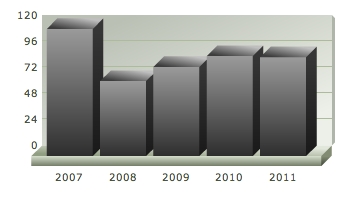
Sales, year to date (Single-family, Santa Cruz County):
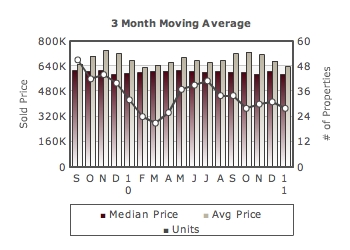
Prices (Single-family, Santa Cruz city):
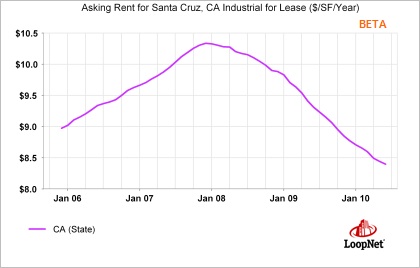
Commercial rents:
For More InformationPlease contact me if you'd like more information about our community or real estate market:Walter Stauss, Lifestyles Real Estate500 Seabright Avenue, Santa Cruz, California 95062Cell: 831.246.4663, Email: walter@831.com, Web: http://www.831.com DRE #01105052 |
|
Turning your home into a rental or buying an investment property? Expect to pay up to 20% more for the right insurance policy to protect your property. If you think a homeowners insurance policy will cover you when you turn your current home into a rental property or buy an investment property, think again. Rental properties require their own type of coverage--landlord insurance, which is different than the homeowners policy you buy when you live in a house yourself. Landlord insurance protects you against losses from fire, lighting, falling trees, wind and hail, water damage, and injury to your tenants and their guests.
But it doesn't cover the renters' household goods. So encourage tenants to buy a renters policy to cover their stuff. You can even include a clause in your lease saying they have to buy renters insurance, so everyone is clear about what's insured and what's not. Landlord insurance is expensive You'll pay 15% to 20% more for a landlord insurance policy than you will for a homeowners policy on the same house--and even more if you offer short-term rentals. Start your policy shopping by calling the company that sold you your homeowners insurance, then check with an independent insurance agent selling commercial and business policies. Ask how you can get discounts if you have fire prevention devices, burglar alarms, or multiple properties.
What a landlord insurance policy probably will cover: - Lightning, windstorm, hail, explosion, riot and civil commotion, smoke, falling objects, snow, ice, sleet, vandalism, sonic boom, sprinkler leakage, frozen pipes, water damage, burglary, volcanoes, and sinkholes.
- Things that belong to you that stay at the property, like appliances, furniture, or lawn care equipment. Keep an inventory (http://www.houselogic.com/articles/compile-home-inventory-right-tools/) of what's on site.
- Outbuildings, like sheds or garages, although this coverage will have its own limit (probably 10% of the overall insurance policy amount).
- Costs to defend yourself against lawsuits filed by tenants or guests, as well as the costs awarded if you lose the case. Some policies cover medical bills for injuries; some don't.
- Lost rental income if the property is damaged and you can't rent it.
What a landlord insurance policy probably won't cover: - The tenants' belongings.
- Your rental property if it's vacant for more than 30 days. Seek an exemption in advance from your landlord insurance company as soon as you know the property is going to be vacant.
- War and nuclear, biological, chemical, or radiological attacks.
Optional coverage you might want to buy: - Flood
- Earthquake
- Vandalism (if the policy you buy excludes it)
- Pool and tennis court insurance
- Liability for personal injury, wrongful eviction, wrongful entry, libel, and slander
Don't forget liability coverage To cover yourself in case you lose a big court case filed by an injured tenant, buy an umbrella insurance policy (http://www.houselogic.com/articles/cost-umbrella-insurance-homeowners/) that gives you liability protection for $1 million to $5 million or more if you have a lot of assets to protect. Don't file a claim unless you absolutely have to There's a limit to how many claims (http://www.houselogic.com/articles/homeowners-insurance-to-claim-or-not-to-claim/) you can file before insurance companies start charging you more or canceling your policies. Claims can quickly add up as you buy more rental properties. One time you always want to file a claim is when someone says they've been injured on your property. One claim you'll want to avoid filing: water damage for less than $10,000 because worries about mold growing in water-damaged properties will lead some insurers to immediately cancel your insurance policy. More from HouseLogic How to Correct Your Clue Insurance Report Improve Your Insurance Score Other web resources Renters Insurance Brochure to Share with Your Tenants
Article From BuyAndSell.HouseLogic.com, by: Dona DeZube, HouseLogic's News Editor, has been writing about real estate for over two decades. She lives in a suburban Baltimore 1970s rancher on a 3-acre lot shared with possums, raccoons, foxes, a herd of deer, and her blue-tick hound.
For More InformationPlease contact me if you'd like more information about our community or real estate market: Walter Stauss, Lifestyles Real Estate500 Seabright Avenue, Santa Cruz, California 95062Cell: 831.246.4663, Email: walter@831.com, Web: http://www.831.com DRE #01105052
Home sales rebounded in 49 states during the fourth quarter of 2010 with 78 markets—just over half of the available metropolitan areas—experiencing price gains from a year ago, while most of the rest saw price weakness, according to the latest survey by the National Association of REALTORS®. Total state existing-home sales, including single-family and condo, jumped 15.4% to a seasonally adjusted annual rate of 4.80 million in the fourth quarter from 4.16 million in the third quarter, but were 19.5% below a surge to an unsustainable cyclical peak of 5.97 million in the fourth quarter of 2009, which was driven by the initial deadline for the first-time buyer tax credit. In the fourth quarter, the median existing single-family home price rose in 78 out of 152 metropolitan statistical areas (MSAs) from the fourth quarter of 2009, including 10 with double-digit increases; three were unchanged and 71 areas had price declines. In the fourth quarter of 2009, a total of 67 MSAs experienced annual price gains. The national median existing single-family price was $170,600 in the fourth quarter, up 0.2% from $170,300 in the fourth quarter of 2009. The median is where half sold for more and half sold for less. Distressed homes, typically sold at discount of 10-15%, accounted for 34% of fourth quarter sales, little changed from 32% a year earlier. Lawrence Yun, NAR chief economist, is encouraged by the trend. “Home sales clearly recovered in the latter part of 2010 and are helping to absorb the inventory, including many distressed properties. Even with foreclosures continuing to enter the inventory pipeline, they’ve been selling well and housing supplies have trended down,” he said. “A recovery to normalcy requires steady trimming of the inventories.” Yun added, “An improving housing market and job growth will go hand in hand. The housing recovery will mean faster job growth.” He projects about 150,000 to 200,000 jobs will be added to the economy this year from an anticipated 300,000 additional home sales in 2011. Yun further noted, “Better than expected sales and/or strengthening in home values can have an even bigger job impact as consumer spending would naturally rise from a housing wealth recovery affecting a vast number of American families.” NAR President Ron Phipps, broker-president of Phipps Realty in Warwick, R.I., said a very favorable affordability environment is a huge factor in the recovery. “Although job growth has been relatively modest and credit is tight, you can’t underestimate the impact of historically high housing affordability conditions,” he said. “Mortgage interest rates recently hit record lows, median family income has edged up and prices in most areas have been stable following the correction from the housing boom. For people with good credit and long term plans, it’s hard to imagine a better opportunity than what we see today,” Phipps said. “Unfortunately, the flow of credit is unnecessarily tight and is constraining the pace of the housing and job growth recoveries.” According to Freddie Mac, the national average commitment rate on a 30-year conventional fixed-rate mortgage was a record low 4.41% in the fourth quarter, down from 4.45% in the third quarter; it was 4.92% in the third quarter of 2009. “The healthier local housing markets are also experiencing favorable local employment conditions,” Yun said. Job growth is a major factor in price appreciation in metro areas such as the Washington, D.C., region, where the median existing single-family home price of $331,100 in the fourth quarter is 8.1% higher than a year ago; the Boston-Cambridge-Quincy area, at $346,300, up 4.2%; and Austin-Round Rock, Texas, at $190,300, up 4.1%. Smaller metro areas sometimes see larger swings in price measurement depending on the types of properties that are sold in a given period. In such markets, full year price data can provide additional context. In the condo sector, metro area condominium and cooperative prices—covering changes in 57 metro areas—showed the national median existing-condo price was $164,200 in the fourth quarter, which is 6.4% below the fourth quarter of 2009. Twenty-two metros showed increases in the median condo price from a year ago and 35 areas had declines; only 11 metros saw annual price gains in fourth quarter of 2009. “Consumers in the hard hit regions of Nevada, Arizona and Florida were able to scoop up condos at absolute bargain basement prices,” Yun said. Median condo/co-op prices in affected metro areas include Las Vegas-Paradise at $60,700, Phoenix-Mesa-Scottsdale with a fourth quarter median of $68,900, and Miami-Fort Lauderdale-Miami Beach at $81,900. Regionally, the median existing single-family home price in the Northeast increased 2.3% to $240,400 in the fourth quarter from a year earlier. Existing-home sales in the Northeast rose 15.0% in the fourth quarter to a level of 797,000 but are 22.8% below the surge in the fourth quarter of 2009. In the Midwest, the median existing single-family home price rose 0.5% to $139,200 in the fourth quarter from the same period in 2009. Existing-home sales in the Midwest jumped 18.3% in the fourth quarter to a pace of 1.02 million but are 25.4% below the cyclical peak one year ago. In the South, the median existing single-family home price edged up 0.3% to $152,400 in the fourth quarter from the fourth quarter of 2009. Existing-home sales in the region rose 11.4% in the fourth quarter to an annual rate of 1.82 million but remain 17.8% below the surge in the fourth quarter of last year. The median existing single-family home price in the West declined 2.9% to $214,400 in the fourth quarter from a year ago. Existing-home sales in the West jumped 19.9% in the fourth quarter to a level of 1.17 million but are 14.2% below the cyclical peak in the fourth quarter of 2009. “A good portion of the sales activity in the West has been driven by investors taking advantage of discounted foreclosures, with high levels of all-cash transactions,” Yun explained.
For More InformationPlease contact me if you'd like more information about our community or real estate market: Walter Stauss, Lifestyles Real Estate500 Seabright Avenue, Santa Cruz, California 95062Cell: 831.246.4663, Email: walter@831.com, Web: http://www.831.com DRE #01105052
| |


